Secured Document Embroidery Review
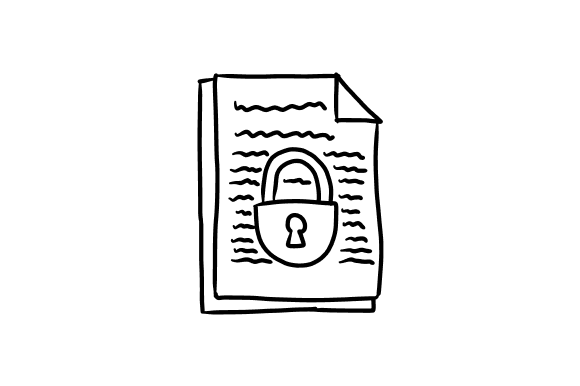
As a designer who spends half my life staring at stitch charts and the other half arguing with fabric tension, I don’t just buy an embroidery file; I stress-test it. When I first pulled up Secured Document, a graphic illustration categorized under Illustrations and Graphics, my initial reaction was one of cautious curiosity. The title suggests security, privacy, or perhaps a locked state, which immediately brings to mind specific aesthetic directions: minimalist, corporate, tech-forward, or even playful depending on the execution. But does it translate from a screen to thread? That is the real question for any embroiderer looking to add value to their handmade product line.
First Impressions and Visual Personality
The moment you look at Secured Document, the mood is distinct. It isn’t a whimsical floral or a rugged outdoorsy motif. Instead, it carries a sense of authority and clarity. In the world of digital assets, this kind of imagery often relies on clean lines, bold shapes, or symbolic representation—think locks, shields, keys, or abstract geometric seals. For an embroidery project, this translates to a design that demands precision. There is no room for ambiguity in stitching a "secured" concept; the lines must be crisp, and the negative space must breathe.
I find that this visual personality fits naturally into modern branding and professional wear. It feels right at home on a custom apparel item for a cybersecurity firm, a boutique data privacy consultant, or even a humorous take on personal boundaries for a general audience. The design assets provided in this category usually allow for versatility, but the core theme remains focused. It creates a mood of protection and order, which can be incredibly powerful when rendered in high-quality thread.
Real-World Application: From Screen to Stitch
Let’s talk about where this actually lives. I recently imagined using Secured Document for a batch of custom embroidered patches intended for a client’s new line of secure storage bags. The idea was to brand the product with a subtle yet recognizable symbol of safety. Here is how the design performed in my mental mockup process.
On a sturdy canvas tote bag design, the graphic would pop beautifully. The contrast between the dense fill stitch areas and the surrounding background fabric allows the eye to focus on the central icon. However, if I were to scale this down for a sweatshirt embroidery placement on the chest, I had to consider the scale carefully. A complex illustration might get lost in the weave of a heavy cotton jersey. But Secured Document, being a graphic illustration, likely has simplified geometry that holds up well at smaller sizes, provided the details aren’t overly intricate.
I also envision this working exceptionally well as a baby embroidery piece for parents who appreciate minimalism. Imagine a tiny, clean lock or shield motif on a muslin burp cloth or a nursery decor pillow cover. It’s gender-neutral, timeless, and speaks to the universal desire to protect what matters most. For holiday embroidery, it could serve as a clever gift tag or a small accent on a kitchen towel, signaling that the cookies (or secrets) inside are safe.
Where Caution Is Required
Not every surface is created equal, and Secured Document has its limitations. If you are planning to use this on curved surfaces like caps or hats, you need to be careful. The design likely relies on flat, two-dimensional geometry. Wrapping a sharp-edged graphic around a curved brim can distort the meaning of the image, making a "secure" symbol look crooked or broken. In such cases, sticking to a flat panel on the front of the cap is safer.
Similarly, textured fabrics pose a challenge. While a rough linen or a thick wool blend adds character, it can obscure the fine details of a graphic illustration. If the original file contains thin lines or tiny text elements, they may disappear into the nap of the fabric. I always advise testing the design on scrap fabric first, especially if you are working with dark fabric or stretchy knit materials. On stretchy fabric, the underlying stabilizer becomes critical to prevent puckering, which would ruin the clean look of the graphic.
Another area to watch is small hoop sizes. If you are creating an embroidered patch for a craft business or a small shop product, you might be tempted to go very small. But if the Secured Document file includes decorative accents or tiny lettering, those elements will turn into a muddy blob of thread. It is better to have a slightly larger, clearer design than a tiny, illegible one. Check your stitch density before committing to production; too much density in a small area can make the fabric stiff and uncomfortable, particularly for items like aprons or baby clothes that require frequent washing and softness.
Design Notes for the Practical Embroiderer
To get the best result from this embroidery file, you need to treat it with the same respect you would give a vector graphic. First, review the stitch types. Does it rely heavily on satin stitch for borders? Satin stitch looks luxurious but can struggle on slippery fabrics. Does it use running stitch for outlines? Running stitch is elegant but requires a stable base. Ensure you are using the proper stabilizer for your chosen fabric texture. A cut-away stabilizer is often best for garments that will be worn and washed repeatedly, while tear-away might suffice for temporary items like holiday gifts.
Thread colors are another crucial factor. Since this is a graphic illustration, color blocking is likely key to its readability. Don’t be afraid to experiment with metallic threads for accents if the design allows, but keep the main body in solid, high-contrast colors. Compare light and dark fabric backgrounds early in your testing phase. A design that looks great on white cotton might vanish on beige linen. I also recommend testing it in black and white mockups to ensure the shape reads clearly without the help of color.
Finally, always confirm licensing before selling finished items or digital products. Just because you bought the graphics doesn’t automatically mean you have commercial rights for mass production. This is a common pitfall for Etsy sellers and creative entrepreneurs. Make sure you understand whether this is a digital embroidery file for personal use or if it grants broader commercial embroidery rights.
Final Verdict
Secured Document is a strong candidate for designers looking to add a touch of professionalism and modernity to their portfolio. It bridges the gap between digital illustration and tangible craft, offering a unique angle for custom apparel and branded merchandise. Whether you are an Etsy seller looking to diversify your listings or a hobbyist making a personalized gift, this design offers a clean, impactful aesthetic. Just remember: good embroidery is 50% design and 50% execution. Test thoroughly, choose your materials wisely, and let the quality of your work speak for itself.