Food Packaging Colored Icons Graphics and Icons Review
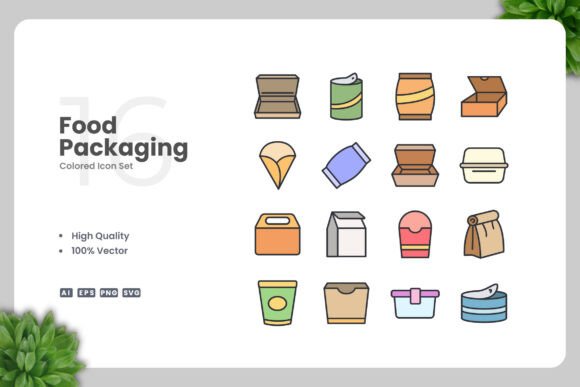
As a digital product creator who has spent years refining listings on Etsy, Creative Fabrica, and Shopify, I approach every new asset with a mix of excitement and skepticism. The market is saturated, and the difference between a listing that converts and one that gathers dust often comes down to visual clarity and versatility. Recently, I evaluated a set titled Food Packaging Colored Icons. At first glance, the description promises simplicity: "Simple and clean design, perfect for websites, mobile apps, books, social media, infographics, flyer, print, banners, posters and many more." It also notes that these assets are easily editable in vector software to resize and change color. But does this hold up in a real-world selling scenario? Below is my practical breakdown of how these design assets can fit into a profitable online shop.
First Impressions and Visual Personality
The immediate appeal of Food Packaging Colored Icons lies in its minimalism. In a sea of overly intricate clipart, clean lines stand out. These graphics feel modern, organized, and slightly playful without being childish. This aesthetic is particularly strong for audiences looking for brand identity elements or small business branding kits. They do not scream; they whisper professionalism. This makes them ideal for buyers who want their products to look curated rather than chaotic.
For sellers targeting the handmade business niche, these icons offer a bridge between professional polish and approachable charm. They work well for bakeries, organic food brands, and lifestyle bloggers. The color palette appears balanced, suggesting that these graphic design assets will integrate seamlessly into existing brand guidelines without clashing. However, because they are colored, you must be mindful of how those specific hues translate across different mediums, especially when moving from screen to print.
Real-World Product Applications
So, where do these digital products actually make money? After testing various use cases, I found several high-potential categories:
- SVG Design Bundles: Since the source files are vector-based, they are perfect for creating Cricut project bundles. You can group these icons into themes like "Healthy Eating," "Snack Time," or "Party Prep" and sell them as ready-to-cut files for crafters.
- Printable Wall Art & Planners: The clean layout lends itself beautifully to kitchen organization. Think sticker design sheets for meal planners, pantry labels, or cute fridge art. The simplicity ensures that text added later remains readable.
- Merchandise Graphics: For print-on-demand sellers, these icons work well on tote bags, aprons, and mugs. A repeating pattern of these illustration elements creates a cohesive look for mug design collections or t-shirt design niches focused on cooking and baking.
- Social Media Templates: Content creators need consistent visuals. These social media graphics can serve as placeholders for recipe posts, ingredient lists, or promotional announcements. Their versatility allows for easy color swapping to match seasonal trends.
- Packaging Design: Small business owners selling physical goods (like cookies or spices) can use these as decorative elements on tags, labels, and boxes. This adds a layer of perceived value to their physical products.
Enhancing Product Presentation
In the digital marketplace, your product mockup is everything. High-quality previews drive click-through rates. Using Food Packaging Colored Icons strategically can elevate your listing images. Instead of generic backgrounds, use these icons to create thematic mockups. For example, display a planner page surrounded by floating icon clusters, or show a tote bag with a subtle pattern derived from the pack.
This approach supports visual storytelling. It helps potential buyers imagine the end result. When customers see how an asset fits into a complete scene, the perceived value of the design bundle increases. Furthermore, using consistent design assets across your shop builds trust. If a buyer likes the style of these icons, they are more likely to purchase other items from your collection that share the same aesthetic DNA.
Where Caution Is Required
No asset is perfect, and knowing where these icons struggle is just as important as knowing where they shine. Here are areas where you should proceed carefully:
- Tiny Details: While clean is good, overly simple icons can lose definition when scaled down too much. Test them at very small sizes, such as 0.5 inches, to ensure they remain recognizable on tiny sticker design sheets or mobile app interfaces.
- Complex Layouts: Avoid overcrowding. Because the design is minimalist, piling too many icons together can create visual noise. Maintain ample whitespace to preserve the visual hierarchy.
- Low-Resolution Print: Always verify file resolution before offering printable design downloads. Ensure the PNG exports are at least 300 DPI for crisp printing. Blurry edges destroy credibility.
- Dark Backgrounds: Check contrast. Some colors in the pack may disappear against dark backgrounds. Provide previews on both light and dark surfaces so buyers know what to expect.
- Cutting Lines: For Cricut project users, inspect the SVG cut quality. Sometimes, grouped shapes in vector software can cause cutting errors. Separate overlapping paths if necessary to ensure a clean cut.
Practical Seller Notes and Workflow
To maximize the utility of Food Packaging Colored Icons, adopt a rigorous testing workflow. Do not just upload the raw files. Create a test environment:
- Mockup Testing: Place the icons in realistic scenarios. How does a grocery list look with these icons next to it? Does a bakery box look premium?
- Background Checks: Preview the assets on white, black, and textured backgrounds. This helps you identify any transparency issues or color clashes.
- Font Pairing: Experiment with typography. These icons pair well with serif font styles for a classic look, sans serif font for modernity, or script font and handwritten font styles for a personal touch. Avoid display font styles that compete for attention.
- File Organization: Organize your final deliverables clearly. Include both SVG and PNG formats. Label files logically (e.g., "apple_icon_color.svg") to enhance user experience.
- Licensing Verification: Before publishing any Etsy product or creative marketplace listing, double-check the commercial license. Ensure you have the right to resell modified versions or include them in larger bundles.
Final Verdict
Food Packaging Colored Icons is a solid addition to any digital seller’s toolkit. Its strength lies in its adaptability and clean aesthetic. It is not a flashy, trend-chasing asset, but rather a timeless tool that serves the evergreen demand for food-related content. Whether you are creating Canva template packs, sublimation design files, or infographic resources, these graphics provide a reliable foundation. By testing them thoroughly and presenting them professionally, you can turn these simple icons into a significant revenue stream for your online business.